
Every learning experience starts with these questions…
Who is the learner?
Museum volunteers are often the first and most impactful human contact in a child's visit. They are the person who smiles, explains the exhibit, redirects a frustrated kid, or notices that a family needs a little more space. They range from college students exploring careers in education or science, to retired community members who simply love kids and learning. Many have deep content knowledge. Very few have had any formal training in child development, neurodiversity, or inclusive communication. And none of them can predict who needs them most that day. Kids are unpredictable, honest, and don't hide their needs. That's what makes them so special, but it means volunteers need to be prepared to meet them.
Why does it matter to them?
For a child who processes the world differently, who is overwhelmed by noise, or needs a moment before they can engage, or communicates in ways a volunteer might misread as disinterest or defiance, one interaction can shape whether that museum feels like a place for them, or a place they never want to return to.
Volunteers are here because they genuinely care about kids and their community. They want to show up in a way that is supportive, inviting, and meets families where they are. They just need the tools and the practice to know how.
Performance Gap and Design Rational
Museum volunteers don't struggle because they don't care. They struggle because caring isn't the same as knowing what to do when a child starts spinning, or shuts down, or when a caregiver's frustration spills into an interaction that was already fragile.
The performance gap was clear: before training, volunteers defaulted to rule enforcement or avoidance. The goal was to shift that toward curiosity, flexibility, and emotionally intelligent responses in real time.
Emotional intelligence, specifically Daniel Goleman's four domains (self-awareness, self-management, social awareness, and relationship management) gave the project its anchor. Not as a checklist, but as a way of helping volunteers notice what's happening inside themselves before they respond to what's happening in front of them.
A game was the right choice for this for one simple reason: you can't practice emotional intelligence by reading about it. Volunteers needed to make decisions, see consequences, and reflect in a low-stakes environment before they were standing in Discovery Hall with a dysregulated seven year old and a line of families waiting behind them. Richard Mayer's research on game-based learning shaped how the experience was structured to keep cognitive load low and transfer high.
World and Level Design
EQ Explorers unfolds across three museum spaces, each designed around a different audience and a different kind of challenge.
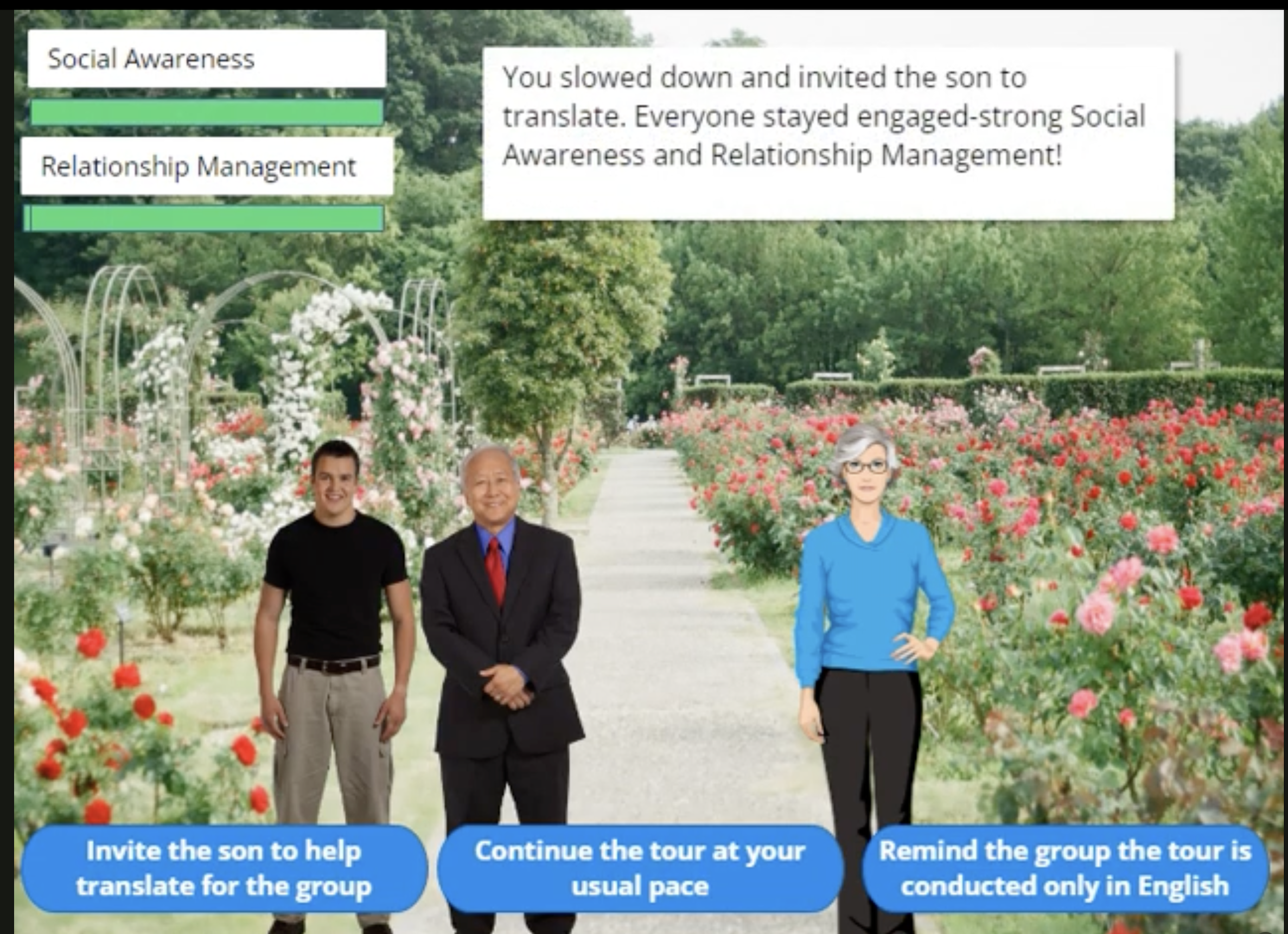
The Nature Trail opens into family and cultural dynamics, multilingual interactions, caregivers navigating their own stress, and moments where a volunteer's assumptions about communication can either build connection or quietly close a door.
In Discovery Hall, volunteers meet early learners, young children in full sensory engagement mode, where overstimulation can tip quickly and the cues are clear if you know what to look for.
The Maker Lab brings older kids and teens, where disengagement looks different, boredom can masquerade as attitude, and the right response requires a softer touch than redirection.
The Maker Lab brings older kids and teens, where disengagement looks different, boredom can masquerade as attitude, and the right response requires a softer touch than redirection.
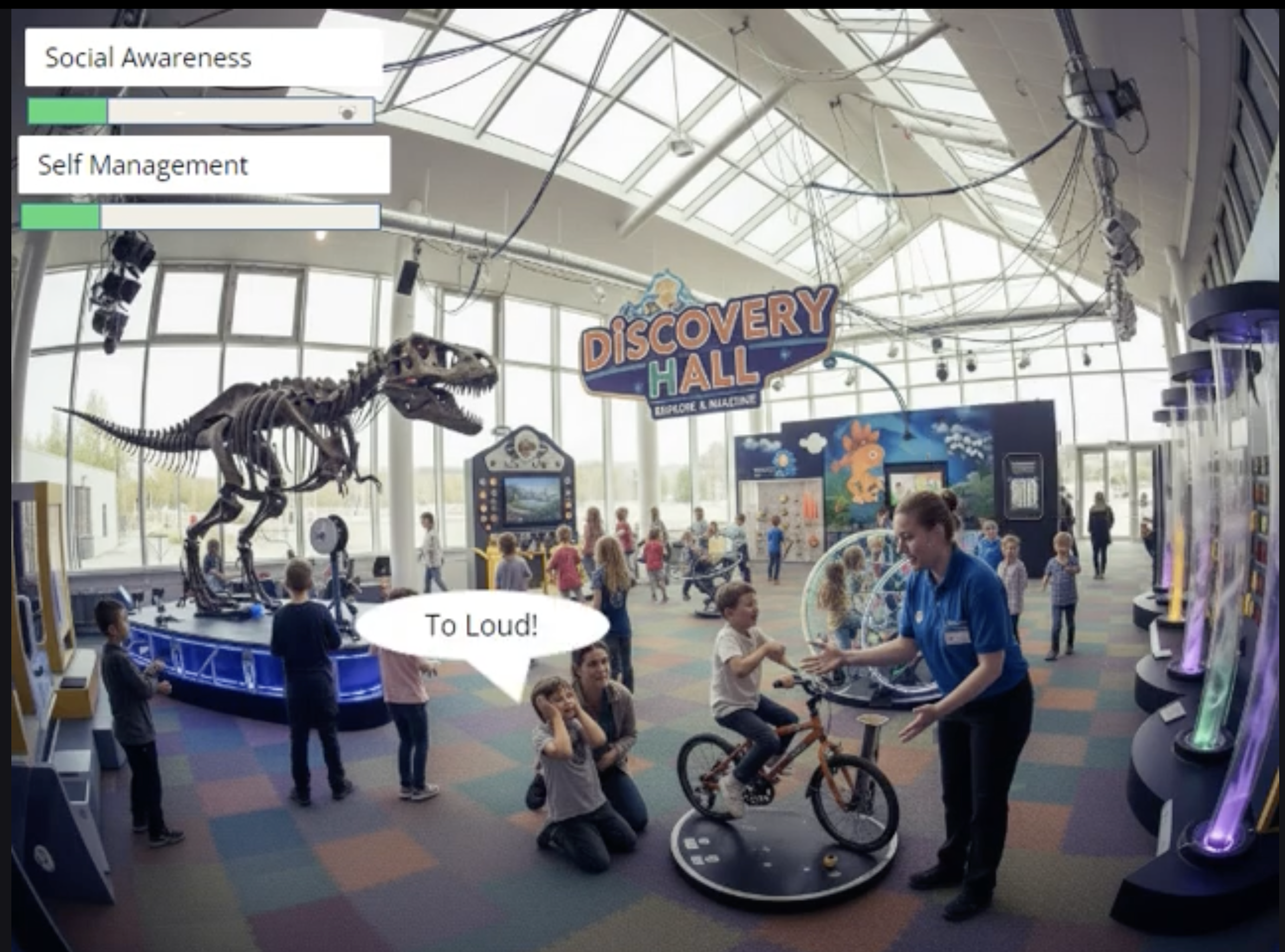
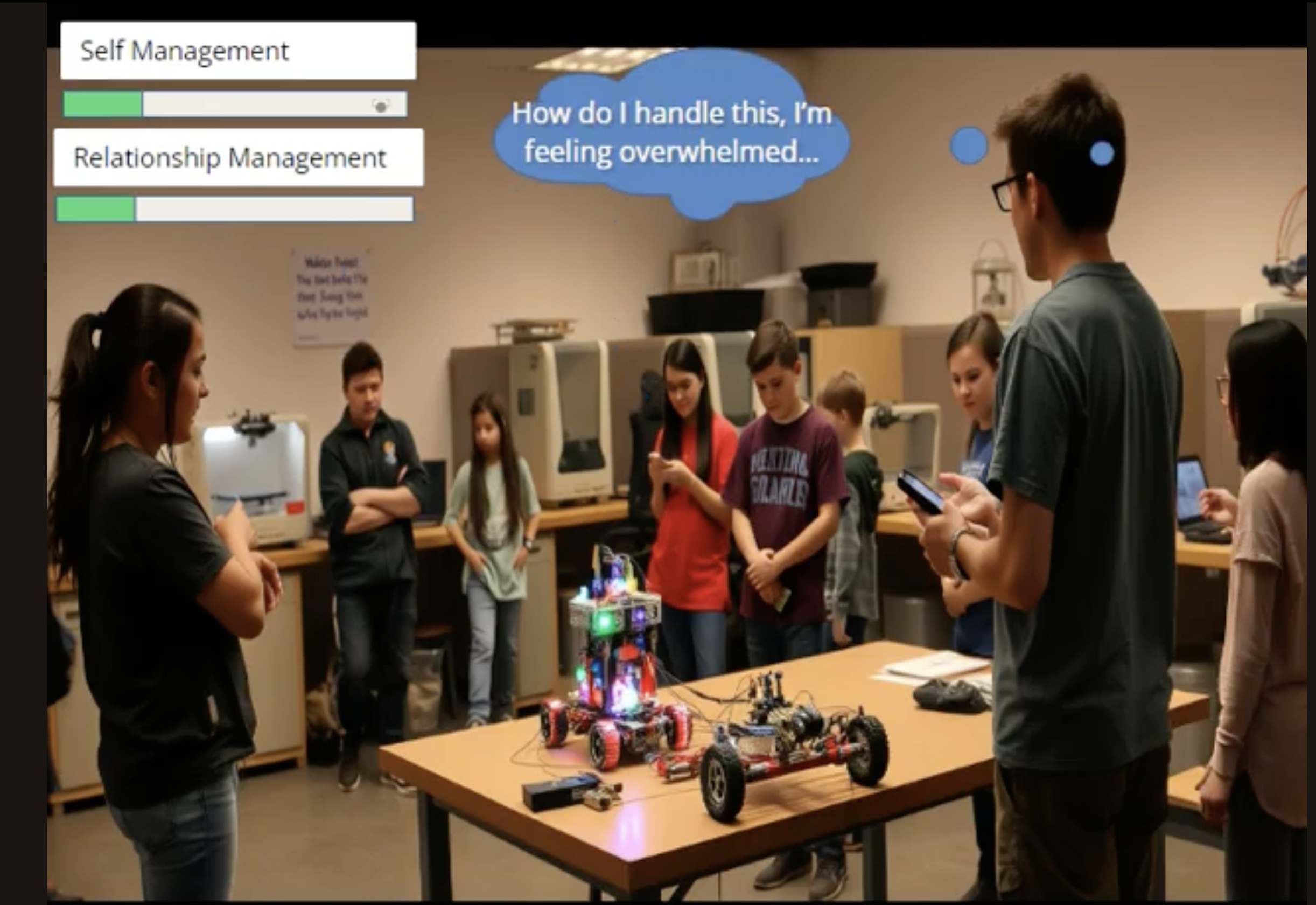
Each space presents scenarios with branching choices. Every decision moves four EQ meters (self-awareness, self-management, social awareness, relationship management) and generates immediate, specific feedback. Not "good job" but "you paused before responding, that's strong self-management." The kind of feedback that names the skill so volunteers can recognize it in themselves next time.
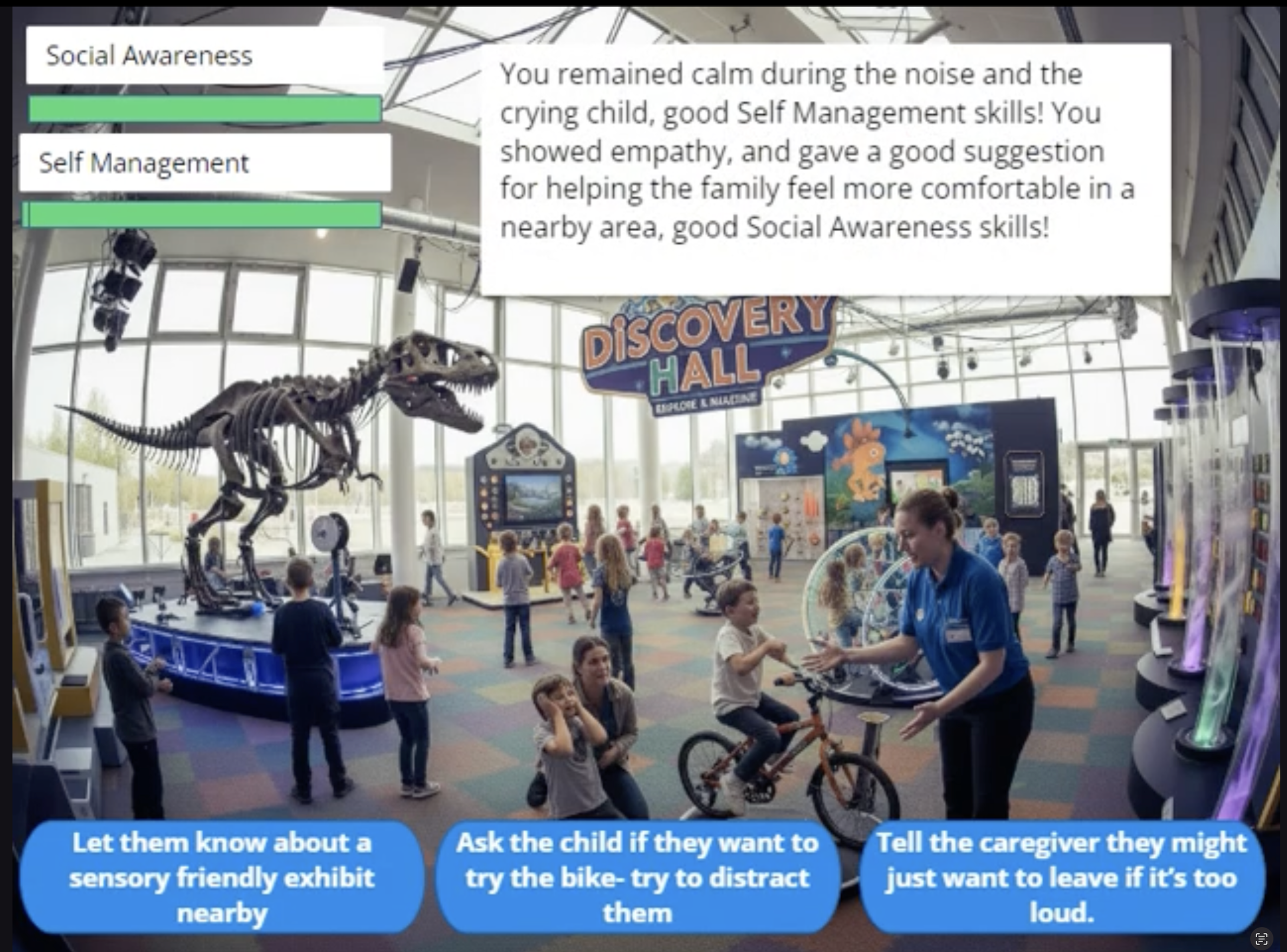
Difficulty builds intentionally. Early scenarios offer clear emotional cues. Later ones layer complexity, subtle signals, conflicting needs, multiple families at once, mirroring what the museum floor actually looks like on a busy afternoon.
Instructional Materials
EQ Explorers was built in Articulate Storyline. The prototype walks through all three museum spaces with fully functioning branching logic, EQ meters that update based on player choices, and immediate, specific feedback at each decision point.
The video walkthrough below gives you a guided tour of the experience. If you want to play it yourself, the live Storyline prototype is linked below that.
The design document details the theoretical framework, world design, learning outcomes, and scenario structure behind every decision you see in the game.
Reflection
In researching this project, I came across other attempts at neurodiversity training that relied on stereotypes and surface-level representation. A character announcing their diagnosis unprompted. Accommodations being treated as a plot point rather than a normal part of a workplace. It showed me exactly the trap I most needed to avoid. Real emotional intelligence isn't built by labeling difference. It's built by practicing how to stay curious when a situation is uncomfortable.
Building EQ Explorers also taught me something about my own design instincts. I wanted to make it complex immediately, every scenario layered, every branch accounted for. The better lesson was to start simple and build up, which is true of most things worth building.
“ You can’t practice emotional intelligence by reading about it. Every design decision in this project came back to that. The game had to put volunteers in the moment, uncertain, imperfect, figuring it out, because that’s exactly where they’ll be on the museum floor.”